Athlete's foot is a disease caused by a fungus that affects the feet. There are millions of different species of fungi out there, but only a handful are responsible for this common and frustrating condition.
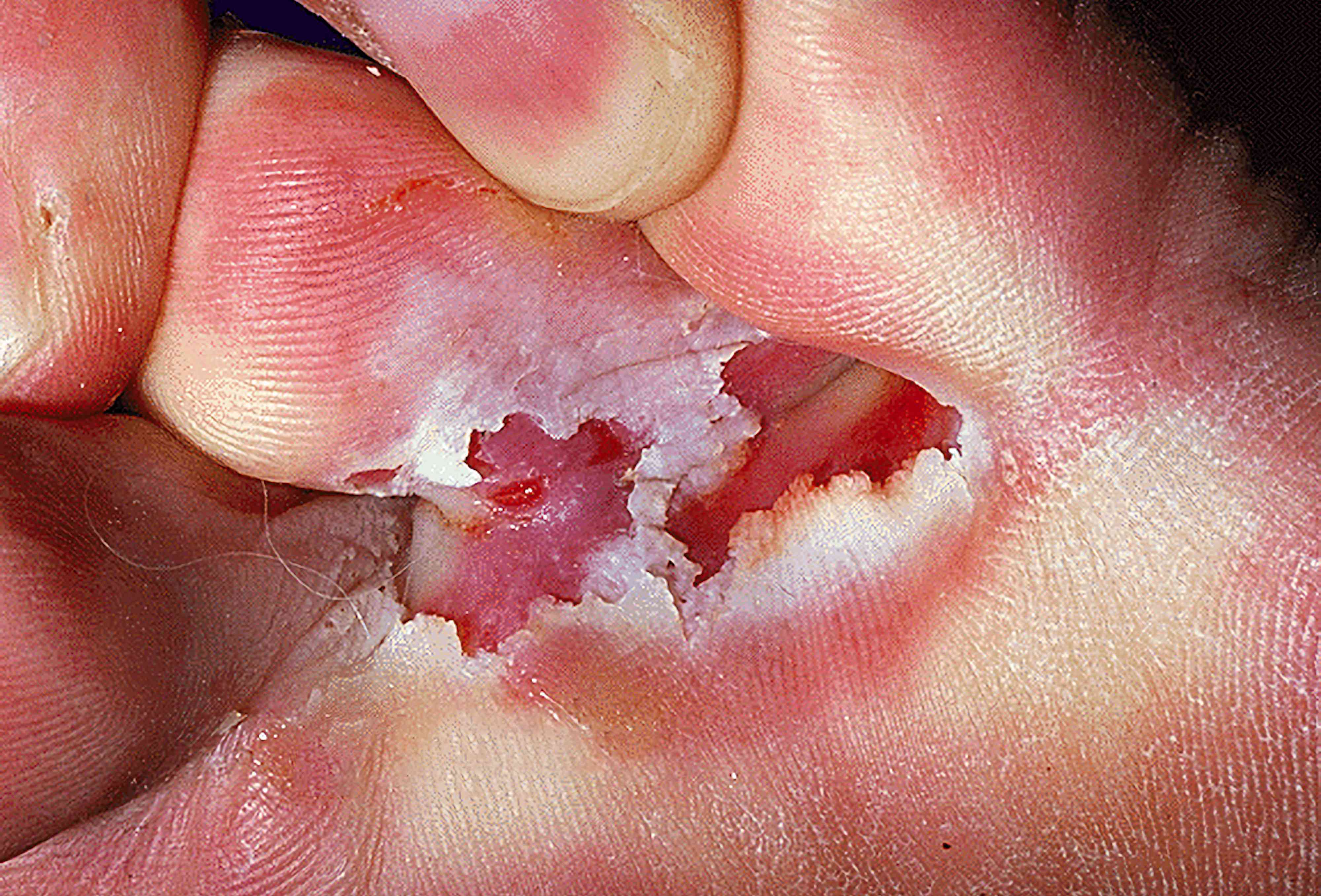
It takes what we call a moccasin distribution, meaning it surrounds the borders of the feet like the shape of a moccasin shoe and infects primarily between the toes. The main symptoms that sufferers experience are itchy, peeling skin, often a split between the toes, and notably, tiny blisters known as vesicular eruptions.
This condition can be very painful, especially if there is an underlying bacterial infection. In fact, 1 in 7 adults have a fungal infection, largely because it is so contagious.
What Is Athlete's Foot?
Athlete's foot is often caught from wet floors, such as showers or the sides of swimming pools. It primarily infects between the toes, causing itchy, peeling skin, splits, and tiny blisters known as vesicular eruptions. The fungus thrives in dark, warm, and damp environments.
Where Does Athlete's Foot Come From?
Athlete's foot is often caught from wet floors, such as showers or the sides of swimming pools. Communal showers in campgrounds and sports centres often harbour the fungus, because it thrives in dark and damp environments.
The feet and groin are typical sites on the body where fungi can take hold, simply because these areas are warm and dark, which creates the perfect conditions for fungi to flourish.
Athlete's foot often affects runners, swimmers, and people who have excessively moist or sweaty feet.
Who Is Most at Risk?
Sometimes, athlete's foot can be associated with certain medical conditions, for example diabetes, or conditions that compromise the immune system such as HIV. Naturally, due to its name, athletes and sports people are prone, along with people who have poor foot hygiene or who do not dry between the toes carefully enough.
Key Risk Groups
Can Athlete's Foot Spread?
There is also a good chance of the infection spreading via towels or washcloths to other parts of the body. In severe cases the fungus can live in all these warm, dark, moist places and thrive.
If the condition worsens, chronic fungal infection can cause splits between the toes that become raw and very painful, affecting mobility and sometimes causing discomfort even when resting.
Do Not Ignore a Worsening Infection
A worsening athlete's foot infection, particularly when combined with a bacterial infection, can cause raw splits between the toes that severely affect mobility. Patients with diabetes or compromised immune function should seek professional podiatric care promptly rather than relying on over-the-counter treatments alone.
What Is the Treatment for Athlete's Foot?
Personal hygiene is essential in prevention, as with a lot of foot conditions. Washing and drying the feet thoroughly is the first step. Wearing ventilated footwear like flip-flops or waterproof sandals in the shower is also recommended.
I recommend to my patients that they throw any old bath mats or towels away, because these items can harbour fungal spores, as can old shoes and socks. Fungal spores thrive in warm, damp, dark places, so shoes and bathroom accessories like bath mats are a prime site for infection.
If you already have athlete's foot, then I recommend getting a good proprietary anti-fungal spray or lotion. I do not advocate anti-fungal powders, because they can produce hard balls that irritate the skin. I also recommend that you use a separate towel for the feet, so that you do not spread the infection to other parts of the body.
The Best Products to Use
Daktarin anti-fungal spray is the best type of antifungal on the market and should be sprayed in all of your footwear, after you have disposed of any old and unused pairs. Use the Daktarin spray in your sock drawers too, because fungal spores will more than likely be lurking there.
If your feet are excessively moist and sweaty, find an astringent product like surgical spirit to dry up the moisture. This will help prevent the splits and blisters that come with chronic infection.
It is better to use an antifungal cream on the actual areas affected on the feet, especially where they are red, itchy, and blistered. Sometimes proprietary products such as Canestan cream work well, or I often suggest Canestan combo, which includes both the cream and a one-dose tablet.
- Daktarin anti-fungal spray for footwear, sock drawers and shower floors
- Antifungal cream such as Canestan applied directly to affected areas
- Canestan combo (cream plus one-dose tablet) for stubborn or recurring infections
- Surgical spirit or astringent to manage excessive foot moisture
- A dedicated separate towel for the feet only
- Replace old bath mats, unused shoes and worn socks
Spray Your Footwear Too
Do not forget to spray Daktarin into all of your footwear and sock drawers. Fungal spores survive in shoes and fabric for a long time, and re-infecting yourself from your own footwear is one of the most common reasons athlete's foot keeps coming back.
When to See a Podiatrist
If the infection keeps coming back, it is advisable to see a Podiatrist who is HCPC Registered. They can give the feet a thorough assessment and find the best way to eradicate this persistent, resistant, and often debilitating infection. A Podiatrist will also provide reassurance, because infections like these can be psychologically draining and a real source of embarrassment for the sufferer.
It is important to take care of your feet, because you only have one pair. Loving your feet will inspire you to look after them, and ultimately they will look after you.
Our Service
Podiatry & Chiropody
Persistent athlete's foot or fungal nail infection? Our HCPC-registered podiatrists provide a full foot assessment and targeted treatment plan to eradicate stubborn fungal infections. From £100.
GRAYS FOOT CLINIC
Ready for Expert Care?
HCPC-registered podiatrists in Holborn, London. Est. 1986.